Some victories end with a rider lifting his hands. Charly Gaul’s victory on Monte Bondone required other people to take over.
At the finish, the Giro’s own retrospective records, he had to be helped off his bicycle. His jersey was cut away. He was taken into a hotel and put in a hot bath. The rider who had continued through the storm could no longer be left to manage the ordinary business of getting dressed or going indoors.[1]
It was June 8, 1956. Summer, on the calendar.
The stage had started in Merano and run for 242 kilometers, with several mountain passes before the final climb. By the time the race reached Monte Bondone, snow had turned a contest between cyclists into a series of decisions about whether to continue. The pink jersey, Pasquale Fornara, abandoned. So did Federico Bahamontes, another of the finest climbers in the field.[1][2]
In a later interview, Bahamontes recalled landslides, large stones on the road, and frostbite in his hands and feet. His account gives the men who stopped something that a result sheet cannot: a voice. They had made their way into the same weather. Their absence from the finish was part of the event.[2]
Gaul kept going. Alessandro Fantini, the next rider to finish, arrived almost eight minutes behind him. That interval is usually presented as a measure of the winner’s superiority. At Bondone, it also means that the people dealing with Gaul had time to see the condition of one rider before the next appeared.


John Wilcockson’s anniversary account describes spectators offering bowls of warm water to competitors along the way. It also records the transformation at the top: Gaul had become the race leader. Two days later, he would win the Giro.[3]
Those are the facts that make the day famous. The cut jersey is the detail that interrupts a comfortable reading of them.
A racing shirt is normally how a photographer identifies someone. At the finish on Bondone, clothing had become a practical obstacle to helping its wearer. Nobody needed to preserve a neat image of the champion for the ceremony. Getting him out of the cold took precedence.
Fornara’s race had ended differently. According to the Giro’s account, his sports director intervened because he feared the leader would hurt himself by continuing. Fornara had possessed a substantial advantage over Gaul. The standing that made him the man to defend became something his team was willing to surrender.[1]
That decision belongs beside Gaul’s persistence. The stage was producing more than one kind of urgency: the rider still pressing toward the top, the leader being persuaded off his bicycle, the people at the finish preparing to deal with whoever arrived next.
At the hotel, the order of events was reversed. The race could wait while Gaul recovered. The Giro’s retrospective describes him coming around and being told that he had taken the pink jersey. The news of his own victory had caught up with him after the people helping him had done their work.[1]
His name went at the top of the results. For a while, the important thing was that he was indoors.
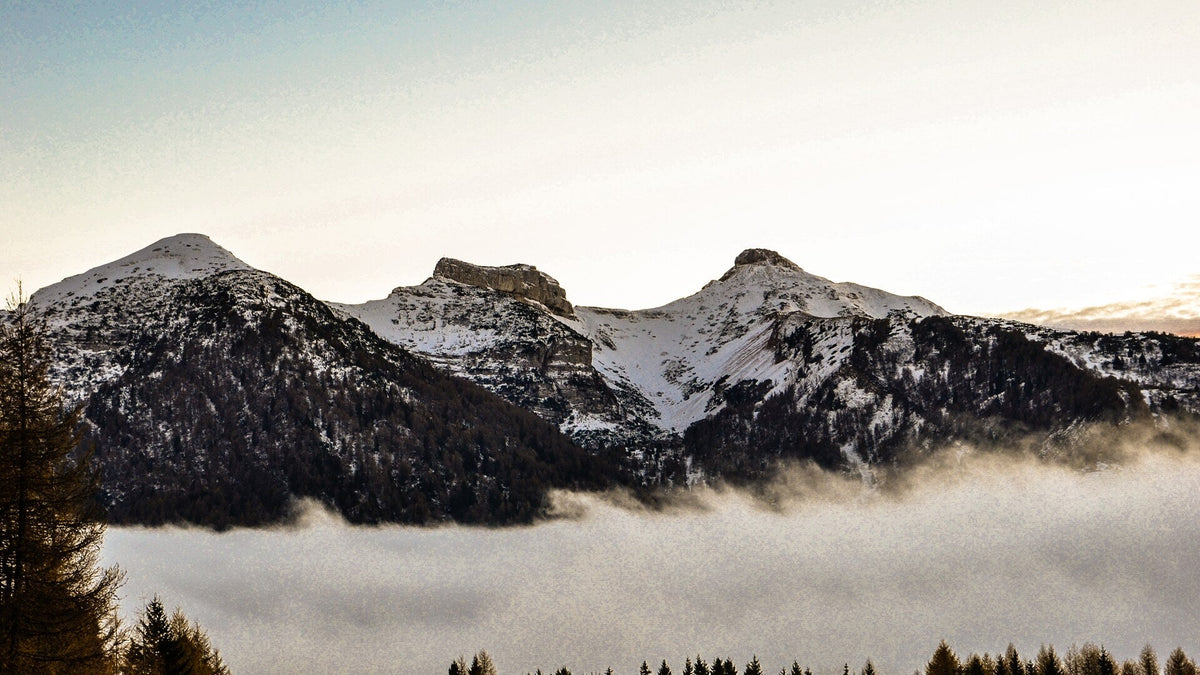
Cover image. A later winter view of Monte Bondone, the mountain featured in the 1956 Giro stage. Matteo Buffa · CC BY-SA 4.0 · cropped

Related reading
Sources and further reading
- Giro d’Italia — Monte Bondone
- Cyclingnews — Bondone brutality, with Bahamontes’s recollections
- John Wilcockson in Velo — Remembering Charly Gaul’s great ride
- Visit Trento — Legendary Charly Gaul climb